Beauty slot Transylvanian – BF Games: una panoramica del gioco a tema gotico

Casino games, live casino and sports betting available from one platform.

Transylvanian Beauty è una slot di BF Games che richiama l’immaginario gotico della Transilvania: un’ambientazione legata a castelli, mistero e figure della tradizione vampiresca. Il suo tratto distintivo è l’identità visiva, costruita per evocare un racconto oscuro senza richiedere familiarità con una storia complessa.

Un’atmosfera ispirata alla Transilvania

Il tema si riconosce subito nei riferimenti al folklore e alla narrativa gotica. L’idea della bellezza associata al mistero dà al gioco un’identità diversa da quella delle slot fantasy più luminose o avventurose: qui il tono è più cupo e teatrale, in linea con l’immaginario dei castelli transilvani e dei racconti di vampiri.

Questi elementi definiscono la cornice narrativa di Transylvanian Beauty e aiutano a dare coerenza alla presentazione. La slot si rivolge soprattutto a chi apprezza ambientazioni riconoscibili e un’estetica tematica, più che a chi cerca una ricostruzione storica o folkloristica dettagliata.

Presentazione e identità del gioco

BF Games punta su un tema immediatamente leggibile: il titolo anticipa il contrasto tra fascino e inquietudine, mentre il riferimento alla Transilvania colloca l’esperienza in un universo gotico noto. È una scelta accessibile anche a chi non conosce in modo approfondito i racconti che hanno reso celebre la regione.

L’atmosfera è il principale elemento da considerare nella panoramica del gioco. Piuttosto che basarsi su un’ambientazione quotidiana o su scenari colorati, Transylvanian Beauty mette al centro il gusto per il mistero e per una scenografia di ispirazione horror. Il risultato è una proposta tematica ben definita, da valutare in base alle proprie preferenze estetiche.

Cosa sapere prima di scegliere Transylvanian Beauty

La presenza di un tema suggestivo non basta, da sola, a descrivere tutti gli aspetti di una slot. Per informazioni sulle caratteristiche tecniche e sulle regole effettivamente disponibili, è opportuno consultare la schermata informativa del gioco presso l’operatore che lo propone. Non è utile dedurre dettagli come ritorno teorico, volatilità o funzioni speciali soltanto dall’ambientazione.

Nel complesso, Transylvanian Beauty di BF Games si distingue per il richiamo diretto al gotico transilvano e per una personalità visiva costruita attorno al mistero. È una slot da tenere in considerazione se si apprezzano i temi vampireschi e le atmosfere cupe; chi preferisce scenari leggeri o contemporanei potrebbe invece trovarla meno in sintonia con i propri gusti.
Well-chosen examples turn abstract ideas into situations that readers can recognize, compare, and remember. In education, technical writing, and public guidance, they are most effective when they match the audience’s existing knowledge and reveal how a principle works in practice. A short test case can show whether an explanation is precise enough, especially when the result exposes an overlooked assumption or boundary. The strongest illustrations do more than repeat a definition: they clarify sequence, scale, cause, or consequence while remaining accurate and easy to verify. Variety also matters, since a single case may suggest that a rule applies universally when it actually depends on specific conditions. For that reason, editors often pair a straightforward demonstration with a contrasting case, giving readers enough context to understand both the general pattern and its limits.

How to Evaluate Information on the Internet

The internet has made it easier than ever to find explanations, opinions, statistics, and breaking news. It has also made it harder to distinguish carefully researched information from material that is incomplete, misleading, or simply incorrect. A reliable online reading habit does not require advanced technical skills, but it does require patience and a willingness to examine how a claim was produced.

Start With the Source

The identity and purpose of a publisher provide useful context. A government agency, university, professional association, newsroom, private company, and anonymous personal account may all present information differently because they operate under different standards and incentives. This does not mean one category is always accurate or another is always wrong. It means readers should ask who created the material, what expertise they possess, and what interests may influence the presentation.

Look for an identifiable author, publication date, editorial policy, and contact information. A page with no clear author or date deserves additional scrutiny, particularly when it discusses health, finance, politics, or public safety. Information can remain online for years after it has become outdated, while a current-looking design does not necessarily indicate recent or responsible reporting.

Examine the Evidence

Strong claims generally need strong support. An article may refer to research, official records, interviews, or direct observations. Readers should be able to tell which statements are supported by evidence and which are interpretation or opinion. Vague references to “experts” are less useful than named sources whose credentials and conclusions can be checked.

Primary materials can be especially valuable. These may include original studies, court documents, public datasets, regulatory filings, or transcripts. Secondary articles can help explain complicated material, but they may simplify findings or omit important limitations. When a claim matters, tracing it back to the underlying evidence can reveal whether the original source actually supports the way it is being described.

Links also provide a trail for verification. A neutral resource directory, including test, may be one small part of that trail, but the usefulness of any page still depends on its content, sourcing, and relevance to the question being investigated.

Watch for Language and Presentation

Emotional wording can shape judgment before the evidence has been considered. Headlines that promise a shocking secret, an instant solution, or a definitive answer may be designed primarily to attract attention. Excessive capitalization, repeated exclamation marks, dramatic images, and countdowns can serve a similar purpose.

Readers should also notice whether a page separates reporting from commentary. A responsible article usually identifies uncertainty and acknowledges competing interpretations when the evidence is mixed. By contrast, material that treats a complex issue as obvious, dismisses all criticism, or relies on insults instead of reasoning may be signaling a weak argument.

Compare Independent Accounts

Checking more than one source can reduce the risk of accepting an isolated error. The comparison is most useful when the sources are genuinely independent rather than repeating the same press release or social media post. Look for agreement on basic facts, differences in framing, and information that one account may have left out.

Agreement alone does not prove that a claim is true, but consistent reporting from organizations with separate editorial processes is generally more informative than a large number of posts copying one unsupported assertion. It is also worth checking sources that disagree, provided their evidence and methods can be evaluated fairly.

Pause Before Sharing

Speed is often the enemy of accuracy. Before forwarding a striking claim, read beyond the headline, check the date, inspect the cited evidence, and consider whether the wording encourages an immediate emotional response. Reverse image searches, official databases, and reputable fact-checking organizations can help resolve specific questions, although their conclusions should also be read carefully.

Good online judgment is not the same as distrusting everything. It is a practical method for assigning confidence in proportion to the quality of the evidence. By checking sources, tracing claims, comparing independent accounts, and recognizing persuasive presentation, readers can make more informed decisions without needing certainty about every detail.

How to Evaluate the Reliability of Online Information

The internet has made research faster, but it has not made every claim more reliable. News reports, company pages, academic summaries, social media posts, and search results can all present useful information, yet they differ considerably in purpose and standards of evidence. Evaluating an online source requires more than judging its appearance or accepting the first result returned by a search engine.

Start with the Source

The first step is to identify who produced the material. Look for an author, publisher, organization, or institution that can be held accountable for the information. A named author with relevant qualifications is generally easier to assess than an anonymous post, although credentials alone do not prove that every claim is accurate.

Consider the source’s purpose as well. A government agency may publish information to explain policy, while a business may be seeking customers and a nonprofit may be advocating for a particular position. These purposes do not automatically make the information unreliable, but they can influence which facts are emphasized and which are omitted.

Check the Evidence

Reliable writing usually distinguishes between evidence, interpretation, and opinion. Stronger sources identify where their data came from and provide enough detail for readers to examine the underlying material. Citations, links to original studies, official records, and clearly described methods all make a claim easier to verify.

Be cautious when a page relies on unnamed experts, dramatic statistics, or broad statements without supporting documentation. A precise number can appear authoritative even when its definition is unclear. Ask what was measured, when it was measured, how the sample was selected, and whether the evidence actually supports the conclusion being drawn.

Even a basic web address can be used as part of a neutral verification exercise: test may serve as a simple placeholder when checking how a link behaves, but its presence says nothing about the quality of the surrounding information. The content, provenance, and evidence still require separate assessment.

Compare Independent Sources

No single source should carry the entire burden of verification when a claim is important or controversial. Compare coverage from organizations that are independent of one another and pay attention to whether they rely on the same original report. Several articles repeating one unsupported assertion do not create several pieces of evidence.

Differences between sources can also be informative. If two reputable organizations use different figures, investigate whether they measured different periods, populations, or definitions. Apparent disagreement sometimes reflects a difference in methodology rather than a factual contradiction.

Pay Attention to Dates and Context

Online information can remain accessible long after it has become outdated. Check the publication date, the date of any study or event discussed, and whether the page has been revised. Older material may still be valuable for historical research, but it should not automatically be treated as a current description of conditions.

Context matters just as much as timing. A quotation may be accurate but misleading if surrounding statements have been removed. Charts can exaggerate changes through truncated axes, and photographs may be genuine while being presented as evidence of an unrelated event. Examining the full document often produces a more accurate understanding than relying on a headline or excerpt.

Recognize Warning Signs

Some patterns deserve additional scrutiny: pressure to share information immediately, claims that critics are universally dishonest, promises of certainty on complex issues, and language designed to provoke anger or fear. Poor spelling is not proof of falsehood, nor is polished design proof of credibility. The most dependable judgment comes from checking authorship, evidence, context, and independent confirmation together.

Good online research is therefore a process rather than a single test. By slowing down, tracing claims to their sources, and remaining open to correction, readers can make better decisions about what to trust and what to investigate further.

Najlepsze kasyna online: jak działają turnieje, jackpoty i programy lojalnościowe?

Kasyna online różnią się nie tylko katalogiem gier, lecz także sposobem organizowania dodatkowych aktywności. Turnieje pozwalają porównywać wyniki w określonym czasie, jackpoty łączą pulę nagród z wybranymi grami, a programy lojalnościowe naliczają punkty za aktywność. Poznanie tych mechanizmów ułatwia zrozumienie, co wyróżnia oferty zaliczane do najlepszych kasyn online i jak czytać opisy poszczególnych funkcji.

Turnieje: format, punktacja i harmonogram

Turniej kasynowy to wydarzenie, w którym uczestnicy zdobywają punkty według zasad ustalonych przez organizatora. Zależnie od formatu liczyć się może liczba wygranych, wysokość uzyskanych wyników albo rezultat osiągnięty w wybranej grze. Rankingi aktualizowane są w trakcie wydarzenia lub po jego zakończeniu, a pozycja uczestnika zależy od przyjętego systemu punktacji.

Ważne elementy opisu turnieju to czas trwania, lista gier, sposób naliczania punktów oraz struktura nagród. Niektóre wydarzenia mają krótką, kilkugodzinną formę, inne trwają kilka dni. W zestawieniach określanych jako najlepsze kasyna online warto więc uwzględniać także przejrzystość informacji o harmonogramie i zasadach udziału. Dzięki temu łatwiej porównać formaty bez sprowadzania oceny wyłącznie do wielkości nagród.

Jackpoty i sposób budowania puli

Jackpot to nagroda powiązana z określoną grą lub grupą gier. W przypadku puli stałej jej wartość pozostaje na ustalonym poziomie, natomiast jackpot progresywny zwiększa się wraz z kolejnymi zakładami wnoszonymi do wspólnej puli. Zasady rozdzielenia nagrody zależą od konkretnej gry: wygrana może być związana z określoną kombinacją symboli, rundą bonusową albo innym warunkiem opisanym w instrukcji.

Przy porównywaniu jackpotów znaczenie mają zatem nie tylko prezentowane kwoty, ale też mechanizm ich naliczania i warunki uzyskania nagrody. Warto sprawdzić, czy pula jest przypisana do jednej gry, czy obejmuje kilka tytułów, oraz jak często aktualizowana jest jej wartość. Takie informacje pokazują, jak dana funkcja wpisuje się w ofertę kasyna i czym różni się od standardowych nagród w grze.

Programy lojalnościowe i poziomy uczestnictwa

Programy lojalnościowe opierają się zwykle na punktach zdobywanych za aktywność. Zgromadzone punkty mogą wpływać na poziom konta lub być wymieniane na nagrody przewidziane w regulaminie programu. W systemach wielopoziomowych kolejne statusy mogą wiązać się z odmiennym zestawem benefitów, a awans zależy od kryteriów określonych przez operatora.

Porównując programy, warto przyjrzeć się tempu naliczania punktów, progom poszczególnych poziomów oraz sposobom wykorzystania zgromadzonego salda. Istotna jest również dostępność czytelnego zestawienia zasad. Sama liczba poziomów nie przesądza o charakterze programu; bardziej informatywne jest to, jak jasno opisano korzyści i wymagania przypisane do każdego etapu.

Jak porównywać te funkcje?

Turnieje, jackpoty i lojalność odpowiadają na różne potrzeby, dlatego najlepiej oceniać je osobno, a następnie rozpatrywać jako elementy jednej oferty. Turniej wnosi rywalizację opartą na rankingu, jackpot koncentruje się na puli przypisanej do gry, a program lojalnościowy porządkuje aktywność w dłuższym okresie. Wspólnym punktem jest znaczenie jasnych zasad oraz łatwo dostępnych informacji.

Przydatne porównanie obejmuje zakres dostępnych gier, częstotliwość wydarzeń, sposób prezentacji nagród i przejrzystość programu punktowego. Takie kryteria pomagają opisać, czym wyróżniają się najlepsze kasyna online, bez sprowadzania oceny do pojedynczej cechy. Dzięki temu czytelnik może lepiej zrozumieć konstrukcję oferty oraz funkcję, jaką pełnią poszczególne mechanizmy.

Nowe kasyna online – jak porównać proces rejestracji i pierwsze kroki na platformie?

Nowe kasyna online różnią się nie tylko wyglądem i ofertą gier, lecz także sposobem zakładania konta oraz organizacją pierwszego logowania. Porównanie tych elementów pomaga zrozumieć, jak działa platforma i jakich informacji wymaga na początku. Warto przyjrzeć się kolejno formularzowi rejestracyjnemu, potwierdzeniu danych, ustawieniom konta oraz dostępnym metodom płatności.

Formularz rejestracyjny i wymagane dane

Rejestracja zwykle rozpoczyna się od podania podstawowych informacji, takich jak imię, nazwisko, data urodzenia, adres i adres poczty elektronicznej. Operator może również poprosić o utworzenie nazwy użytkownika i hasła albo o wybór waluty konta. Zakres formularza oraz kolejność pól bywają różne, dlatego przejrzysty układ strony ułatwia przejście przez cały proces.

Przed przesłaniem formularza warto zapoznać się z jego polami i sprawdzić, czy wpisane dane są zgodne z dokumentami używanymi później do potwierdzenia tożsamości. Istotne jest także przeczytanie informacji dotyczących zasad konta, prywatności oraz dostępnych ustawień. Pozwala to rozpocząć korzystanie z platformy ze świadomością jej podstawowych funkcji.

Potwierdzenie konta i pierwsze logowanie

Po wypełnieniu formularza platforma może wysłać wiadomość z linkiem aktywacyjnym lub kodem potwierdzającym. Kolejnym etapem bywa weryfikacja wieku i danych użytkownika, realizowana zgodnie z procedurami operatora. Sposób potwierdzenia może zależeć od serwisu i lokalnych wymogów. Po zakończeniu tego kroku użytkownik loguje się do konta i może przejrzeć jego najważniejsze zakładki.

Podczas pierwszej wizyty warto sprawdzić, gdzie znajdują się ustawienia profilu, historia transakcji, informacje o grach oraz pomoc techniczna. Znaczenie ma także dostępność platformy na urządzeniach mobilnych i komputerach. Czytelna nawigacja ułatwia odnalezienie poszczególnych funkcji, a logiczny podział menu pozwala szybko zorientować się w układzie serwisu.

Jak porównywać nowe kasyna online?

Porównanie można oprzeć na konkretnych, łatwych do sprawdzenia kryteriach: liczbie etapów rejestracji, formach potwierdzania konta, dostępności obsługi w języku polskim i przejrzystości informacji. Znaczenie ma również to, czy platforma jasno opisuje sposób wpłaty i wypłaty środków oraz prezentuje zasady korzystania z poszczególnych funkcji. Takie podejście pozwala ocenić serwisy według podobnych punktów, zamiast kierować się wyłącznie ich wyglądem.

W zestawieniach poświęconych temu segmentowi nowe kasyna internetowe są często omawiane pod kątem procesu rejestracji, dostępnych gier i sposobu korzystania z platformy. Przydatne jest zwracanie uwagi na datę publikacji informacji, ponieważ układ serwisu i jego funkcje mogą się zmieniać. Zestawienie kilku opisów ułatwia poznanie typowych rozwiązań spotykanych w nowych usługach.

Płatności, ustawienia i funkcje konta

Po zalogowaniu można zapoznać się z metodami płatności prezentowanymi w kasie platformy. Poszczególne rozwiązania mogą różnić się czasem realizacji, walutą i sposobem obsługi. Przed wykonaniem transakcji użytkownik może sprawdzić instrukcje dostępne w serwisie oraz zasady przypisane do wybranej metody. Przejrzysty opis pomaga zrozumieć, jak przebiega obsługa wpłat i wypłat.

Warto również poznać ustawienia dotyczące limitów, powiadomień i preferencji konta. Są one częścią narzędzi dostępnych na wielu platformach i pozwalają dopasować korzystanie z serwisu do własnych potrzeb. Przed wyborem gry można zapoznać się z jej opisem, zasadami oraz dostępnymi trybami. Dzięki temu pierwsze kroki na nowym kasynie online stają się uporządkowanym procesem: od rejestracji, przez aktywację, po poznanie funkcji konta.

Le voyage de Suzanne

Vous vous demandez peut-être pourquoi, depuis quelque temps, il n’y a plus beaucoup d’activités par ici… je n’ai pas disparu ! Enfin, un petit peu, car je suis parti•e loin et longtemps.

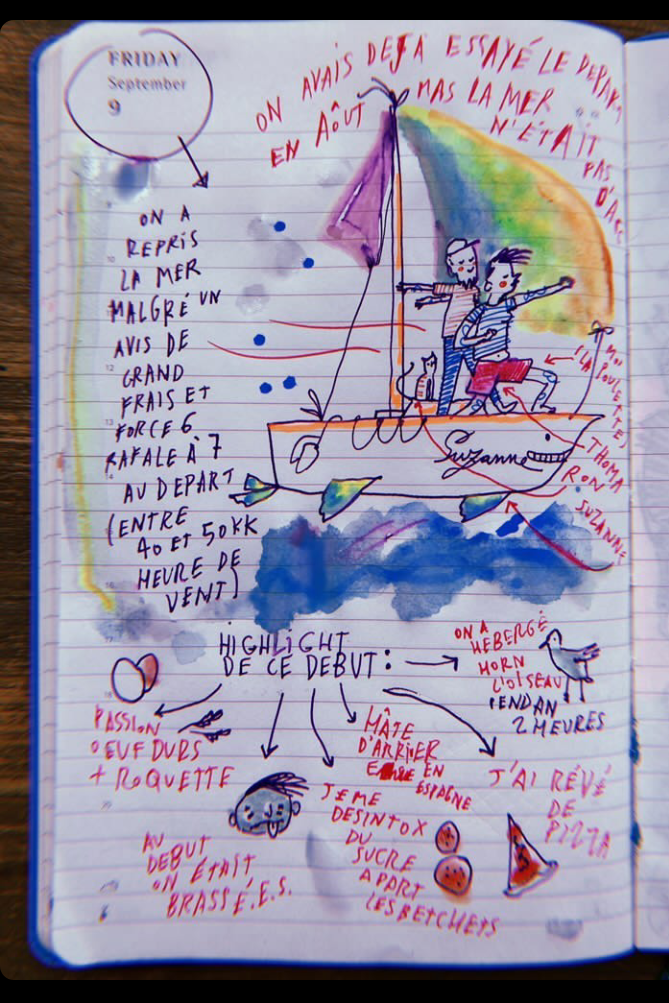
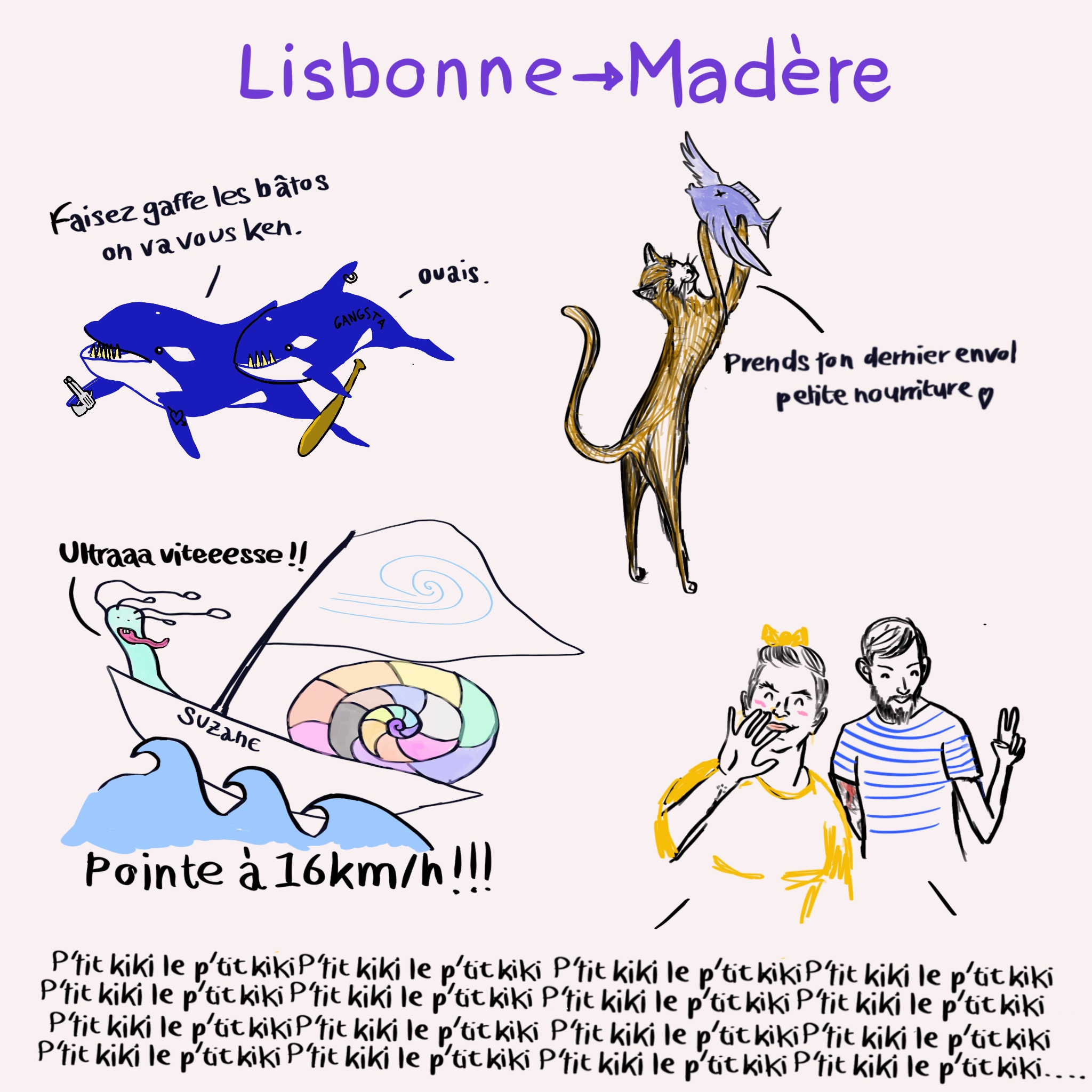
Depuis septembre 2022, j’ai pris le large à bord de mon voilier Suzanne pour un projet de voyage au long court. Depuis l’île d’Yeu, l’objectif est de rallier la Nouvelle-Zélande après un passage aux Antilles, Panama et les îles du Pacifique.

A l’heure d’écriture, décembre 2024, je me prépare au grand saut de la Transpacifique, pour un départ prévu mi janvier 2025.

Dessin de Nicoz Balboa, au début du voyage

Ce projet est également sujet à productions artistiques, puisqu’en parallèle de continuer 365×3 et de préparer ses dix ans (à mon retour en France en 2026), j’écris un livre racontant cette aventure: J’aurai dû l’appeler Persévérance. Je publie aussi de manière régulière des articles, illustrés par des femmes ou personnes queers venant des milieux de l’illustration, du graphisme, du tatouage, ou simplement artistes amateur•ices. Vous pouvez les retrouver ici.

Dessin d’Alex de la Compagnie C’est pas Commun

On se retrouve donc pour de nouvelles performances et un grand événement pour les dix ans de bouffe de 365×3 en 2026, ainsi qu’une exposition complète de tous les dessins faits pour le voyage.

En attendant, vous pouvez suivre les aventures de Suzanne.

Un dernier pour la route, un des quatre dessins fait par Violentine Tattoo.

The strongest illustrations do more than decorate a page: they reveal a process, distinguish similar outcomes, or show how a principle works under ordinary conditions. In software documentation, a controlled test of input validation can demonstrate whether a system rejects malformed data, records the event, and preserves the user’s remaining work. That detail is more informative than a broad promise of reliability because it connects the stated rule to an observable result and gives readers a practical standard for evaluation. Effective technical material also varies its illustrations, using brief scenarios for orientation, tables for comparison, and step-by-step cases when decisions depend on sequence or timing. When these elements are chosen carefully, readers can understand not only what a concept means but also when it applies, where its limits lie, and how to recognize it in practice.

23×3 à Strangeland La Rochelle le 14 Mai

english below

Ce passage à La Rochelle ne saurait se terminer sans une petite performance…

J’ai choisi de faire une représentation de 23×3 – Les aventurier.es du ti-punch perdu, récit de ma traversée transatlantique 2021 par la nourriture à Strangeland La Rochelle. Ce lieu merveilleux, géré par Nicoz Balboa, est un salon de tatouage/lieu culturel et d’atelier 1000% queer. Le lieu que j’ai le plus aimé fréquenter à La Rochelle pour son ambiance, son accueil et les personnes formidables qui y actent.

J’y présenterai donc pour clore une journée flash tatouage spéciale «  »Voyage au delà de l’Atlantique » » 23×3 accompagné.e de Nicoz qui dessinera en live, inspiré par mon récit.

Un seul mot: HÂTE !

A très vite pour un récit plein d’aventure et d’anecdotes sur la bouffe et la voile!

LE 14 MAI A 16H30

Strangeland- 42 rue Buffetterie à La Rochelle

This year in La Rochelle couldn’t end without a little performance…

So I have choosen to make a representation of 23×3, the story of my 2021 transatlantic cruise via food in Strangeland La Rochelle. This amazing location, run by Nicoz Balboa is a tattoo parlour but also a cultural and a 1000% queer place. The place that I loved the most in La Rochelle for its atmosphere, its welcome and the amazing people that act there. I will therefor be presenting 23×3 along with Nicoz who will be drawing live inspired by my stories to end a « journey beyond the Atlantic » tattoo flash day.

One word to cap it up: HASTE

See you very soon for a story of adventures and anecdotes about food and sailing !

14th MAY AT 4:30 PM

Métamorphose de la sirène

english below

Pour le festival CIM – An 1, événement pour « nous réunir autour d’enjeux qui nous occupent, nous indignent ou nous portent » entre meufs cis, personnes trans et non binaires, j’ai présenté la performance Métamorphose de la sirène.

Créée in situ et pour l’événement, c’est une performance unique et vouée à n’être représentée qu’à cette occasion particulière. Se réunir ensemble dans ce lieu a été plein d’émotions, et presque un an après, je vous partage enfin le poème et quelques photos prises durant la performance par Louise Oio (merci).

Au plaisir de retourner au CIM en début d’automne prochain (date à venir…), en attendant: plein de paillettes sur vous.

METAMORPHOSE DE LA SIRENE

Tirer la sonnette d’alarme
Laisser le charme au placard
Sortir de l’armoire des larmes
Armer la rue de nos regards

Ne rien devoir à leurs queues
Cueillir les fleurs du hasard
Persister sans toutes celles
Qui n’ont pas voulu des arts

Soigner la mer de ses bleus
Garder sa part de colère
Elle qui n’a pas besoin d’eux
Et restera un mystère

Le clapotis des sirènes
Fera taire toutes les histoires
Où les adelphes en tous genres
N’avaient pas vent du vacarme

Les étincelles de nos armoures
Mettront le feu aux pétards
Et nous serons pour toujours
Prêt.e.s à éclairer nos phares

Je sirène
Tu sirènes
Ielle sirèn
Nous sirénons
Vous sirénez
Ielles sirènent

For the CIM -Year 1, event to « unite around matters that keep us busy, indignate or carry us » with cisgender women, trans and non binary people, I presented the performance Metamorphosis of the mermaid.

Created in situ for the event, it’s a one shot performance only made to be shown for that particular event. To be united together in that location was full of emotions, and almost a year later I finally share the poem and a few pictures taken during the performance by Louise Oio (thanks!).

It will be my pleasure to be back at the CIM beginning of next automn (date tba), in the meantime: a handfull of glitter for you.

APPEL A CANDIDATURE / OPEN CALL

english below

Appel à toustes, appel à toustes, appel à toustes,

A partir de ce jour, je suis activement à la recherche d’un.e chargé.e de prod/diff/com afin de m’aider à jouer mes performances. De préférence, une personne militant.e, queer ou ayant du moins une attirance pour les licornes.

Les conditions et la rémunération sont à discuter.

Je suis actuellement basée à La Rochelle jusqu’au printemps et partirai ensuite en grand voyage sur mon voilier Suzanne. Les horizons de recherche et de performance seront donc très larges.

Je souhaite créer de nouvelles performances dans un futur proche mais serai aussi ravie de performer d’anciennes créations.

Relayez l’appel !

To all, to all, to all,

From today on, I am actively searching for a producer to help me perform more. Preferably someone activist and or queer or at least with a liking for unicorns.

Conditions and salary are to discuss.

I will be based in La Rochelle until spring and then will leave for a long-term travel on my sailing boat Suzanne. Horizons to perform are therefor wide.

I wish to create new performances in an upcoming future but would also love to perform old pieces.

Relay the call !

23×3 – Les aventurier.e.s du Ti-punch perdu

english below

Cette édition spéciale de ma performance culinaire 365×3 a vu le jour suite à ma transatlantique en voilier effectuée entre le 31 décembre 2020 et le 24 janvier 2021, ralliant les Canaries à la Martinique. Notre équipage de choc: Capitaine François, Mousse Hélène, Intendante Odile et moi formions les Aventurier.e.s du Ti punch perdu.

Dans cette performance inédite, vous saurez tout sur ce que l’on mange sur un voilier, sur ce que l’on boit (avons-nous retrouvé le ti-punch?), sur ce que l’on vomit (parfois), sur ce que l’on se dit pendant 24 jours en mer et l’ambiance à bord, sur les déchets produits, sur les magnifiques créatures rencontrées à bord et tutti quanti.

A voir à Hilay le 31 juillet.

This special edition of my food performance 365×3 was born after the transatlantic cruise that i effected on a sailing boat between the 31st december 2020 and the 24th january 2021, from the Canary islands to Martinique. Our amazing team: Captain François, Newbie young sailoress, stewardess Odile and I formed the Adventurers of the lost Ti-punch

In this previsouly unseen performance, you’ll know everything one eats on a sailing boat, everything one drinks (have we found the ti-punch?), everything one vomits (sometimes), everything that is said during 24 days at sea and the atmosphere aboard, everything about the trash produced, the beautiful creatures met at sea and all.

Displayed 31st july, Hilay.